

Large Handbag

A large handbag solves a specific daily problem: carrying work, personal and travel essentials without juggling several separate bags. The right large handbag offers generous capacity while keeping its contents accessible, its silhouette controlled and its weight comfortable on the shoulder. Unlike an open tote or a compact crossbody, this format can combine structured storage, secure closures, top handles and an adjustable strap in one practical design.
Explore shapes that accommodate a tablet, a water bottle, a large wallet and a light layer while preserving a refined profile. Compare dimensions, handle drops and interior layouts below, then choose the handbag that matches how you move through workdays, weekends and short journeys.
Capacity matters only when it remains usable. A large handbag with one deep, unstructured compartment may hold plenty, yet small items quickly disappear beneath a laptop sleeve or folded cardigan. A more effective handbag has a broad opening, a stable base and dedicated pockets positioned where a hand can reach them without emptying the main compartment.
For everyday use, a practical internal arrangement separates fragile, valuable and frequently handled objects. This is what distinguishes a functional handbag from a simple haul bag:
The best dimensions depend on what you genuinely carry. A width of approximately 38–48 cm creates room for documents and larger belongings, while a depth near 12–18 cm prevents the base from becoming excessively bulky. Height also matters: around 27–32 cm can conceal contents while preserving a balanced view of the silhouette.
| Daily contents | Useful handbag configuration | Capacity benefit |
|---|---|---|
| Wallet, phone and personal essentials | Soft large format with two internal pockets | Easy access without unnecessary bulk |
| Tablet, documents and charger | Structured base with padded divider | Keeps work items upright and protected |
| Travel layer, bottle and cosmetic pouch | Extra-large body with zipped closure | Contains bulky items securely |
If you prefer a wider opening with fewer internal divisions, compare this format with the roomy carryall range. A handbag generally provides more closure options and organisation, while a tote prioritises direct access and an open interior.
Place your five largest daily items side by side before choosing. Their combined footprint reveals whether you need width, depth or a taller handbag rather than simply an oversized exterior.
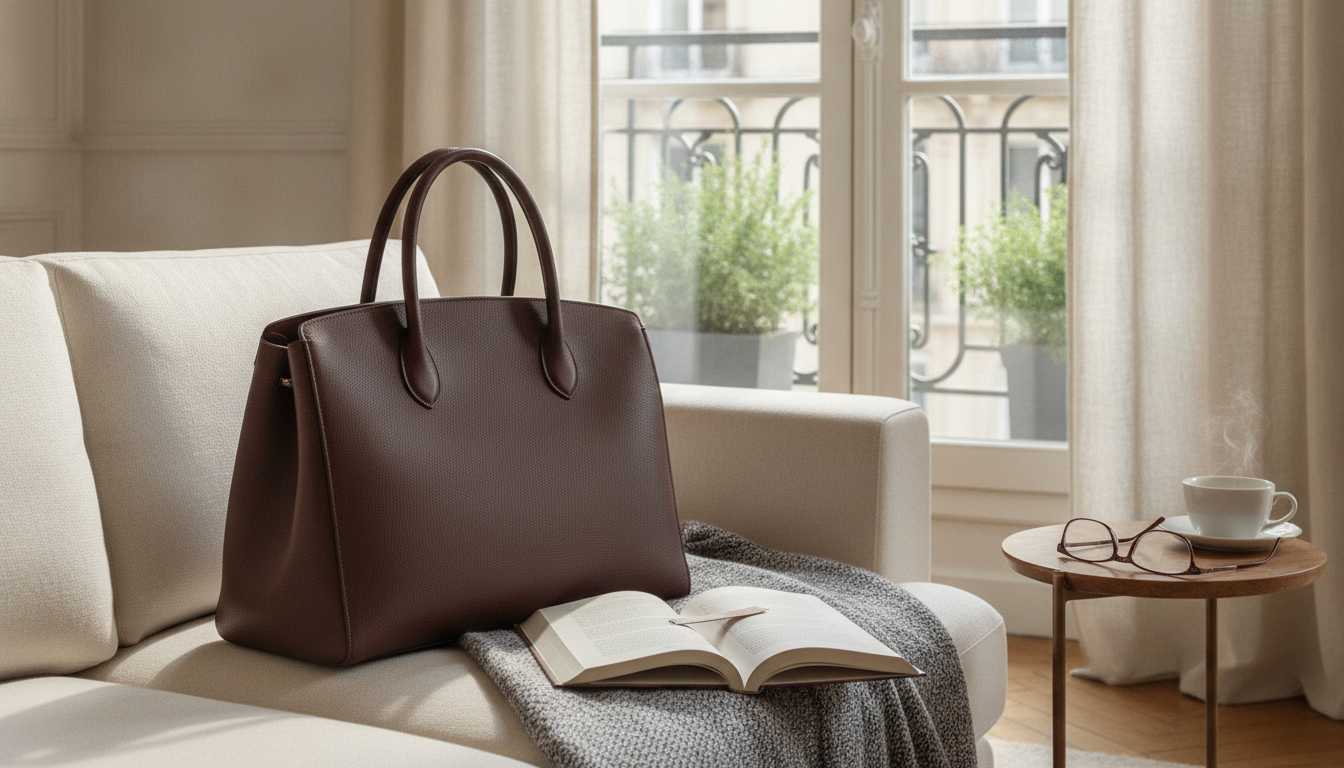
A large handbag changes character according to its construction. Structured designs retain crisp lines, keep documents flat and sit upright during meetings. Slouchy handbags create a softer, broken-in feel and adapt around bulky contents. A deconstructed trapezoidal silhouette occupies the middle ground: its broad base supplies room while subtle curves reduce the visual weight of the bag.
Material reinforces this distinction. Grained leather disguises minor marks and supplies tactile depth; smooth leather creates a clean, refined surface but shows scratches more readily. Suede and nubuck feel soft and contemporary, although their open texture needs protection from moisture. Technical mesh reduces weight and gives an extra-large handbag an airy appearance, while woven fibres create a dry, natural touch suited to warm conditions.
Colour also affects perceived scale. Black makes a generous handbag appear more compact and emphasises gold-tone metal or tonal hardware. Tan and chocolate reveal grained texture under natural light, while white or graphic fabric highlights the full geometry of the design. For smaller, more formal proportions, browse the compact handbag references and compare how reduced dimensions change capacity and hand carry.
A large panel magnifies texture. Fine grain reads as discreet and uniform, pronounced grain gives visual softness, and smooth calfskin reflects light more sharply along the handbag’s curves.
The larger the handbag, the more important its carrying system becomes. Short top handles provide controlled hand carry, but they concentrate weight in the fingers. A broad shoulder strap distributes pressure over a wider area, while an adjustable crossbody strap keeps both hands free. Removable hardware lets one handbag shift between these modes as the load changes.
Handle drop determines whether the bag sits comfortably. A top handle drop near 15–20 cm is suited to the hand or forearm. Shoulder carry usually needs more clearance, particularly over a coat. For crossbody use, a strap around 90–120 cm may offer useful adjustment, though body height and the desired resting point should guide the final setting.
| Carry mode | Main advantage | Point to inspect |
|---|---|---|
| By hand | Precise control in crowded spaces | Reinforced handle attachments |
| On the shoulder | Fast access with balanced weight | Drop length and strap width |
| Crossbody | Hands-free movement and closer security | Adjustable length and strong clasps |
Look beyond the strap itself. Reinforced stitching, substantial clasps and a secure top closure help the handbag cope with a fuller load. A zip offers the strongest all-around containment, while a magnetic button gives faster access but may leave side openings. Feet protect a structured leather base; a waterproof compartment can isolate an umbrella or bottle during work and travel.
Women who prefer coordinated storage can compare the handbag with matching bag and wallet sets. Separate pouches reduce loose contents and make it easier to move essentials between large handbags.
A spacious body can encourage overpacking. Check the handbag’s empty weight and aim to carry only the day’s essentials; a broad adjustable shoulder strap improves comfort but cannot offset an unnecessarily heavy load.
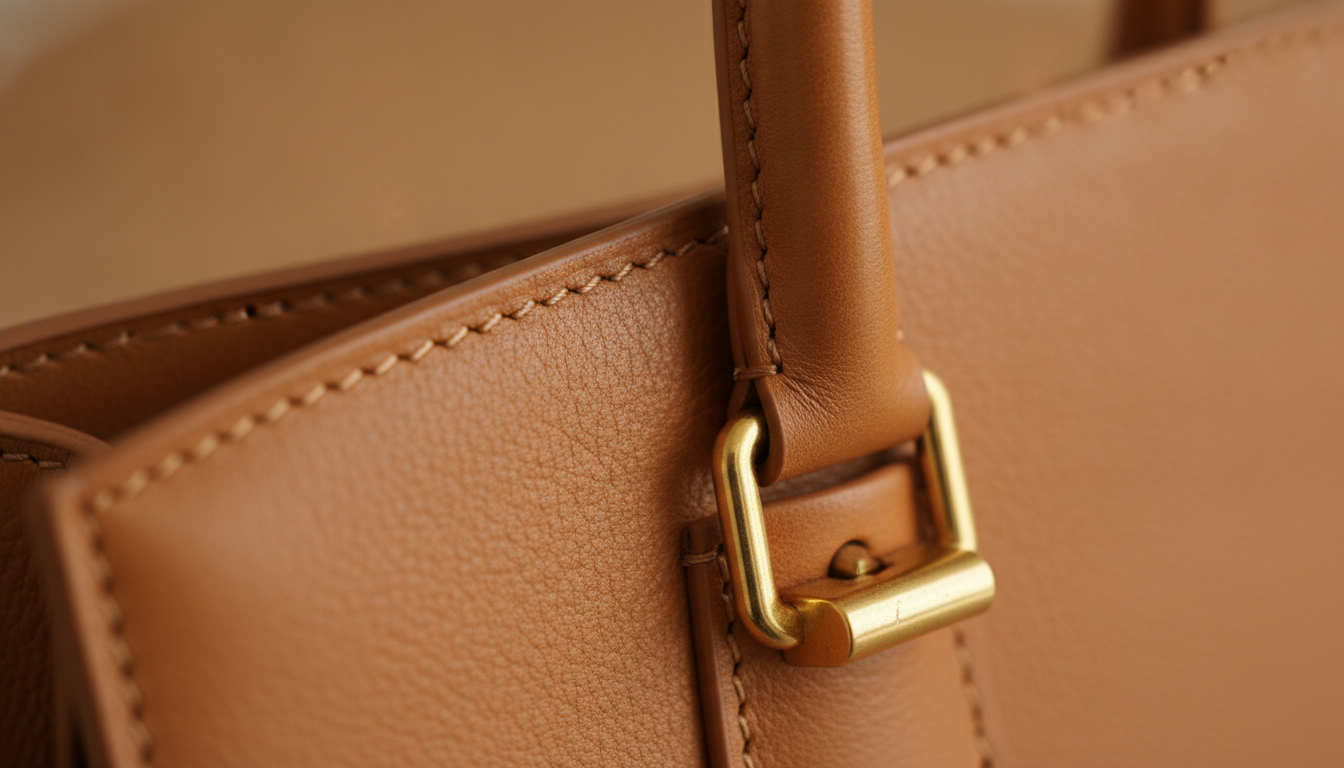
For work, a large handbag should protect devices without resembling rigid luggage. A flat base, restrained hardware and a defined shoulder line create a polished view, while internal divisions keep cables away from cosmetics and personal items. The handbag can then move from a desk to an evening appointment without the utilitarian appearance of a backpack.
During a commute, quick-access pockets become more valuable than maximum volume. A rear zipped compartment can hold a phone or travel card close to the body. On short journeys, an extra-large format may carry headphones, a scarf and reading material, but it should still close fully and fit comfortably beside the wearer.
Unlike oversize bags designed mainly for visual impact, a daily handbag should remain proportionate when only half full. Side gussets, subtle curves and supple materials help the silhouette contract around its contents, preventing the empty upper section from collapsing awkwardly.

Start with use rather than appearance. A large handbag for work needs different organisation from one used for weekends or travel. Measure your largest object, estimate the loaded weight and decide whether you mainly carry by hand, on the shoulder or crossbody.
For a clear example of close-to-body carry, consider a streamlined shoulder design. Its proportions help illustrate how strap position changes access and how a handbag rests against the torso.
A large handbag is a spacious hand-carried or shoulder-carried bag designed to organise several categories of daily belongings. It usually offers a broader base, longer opening and greater depth than a standard purse, often with top handles, internal pockets and an optional crossbody strap.
The handbag format generally adds secure closure, shaped construction and divided storage. A tote favours open access, whereas a handbag can protect valuables and retain a more controlled silhouette. For a lighter seasonal texture, a spacious woven model shows how structure can be maintained with natural-looking fibres.
It can if the internal width and height exceed the device dimensions and the base is adequately reinforced. Use a padded sleeve when no dedicated compartment is provided. Also check that the opening accommodates the laptop without forcing the zip or stretching the top edge.
Grained leather resists visible scuffing well, while coated textiles and nylon are lighter and easier to wipe. A lightweight patterned nylon option demonstrates how a large form can retain visual energy without the weight of thick leather. Always follow the material-specific care instructions.
Empty every pocket, remove surface dust and lightly fill the body with acid-free tissue so it retains its shape. Store the handbag upright in a breathable cover, away from direct light, humidity and heat. Do not suspend a heavy leather design by its handles for extended periods.
Yes, when the chain is used as a controlled accent or reinforced carry element. The chain-detailed handbag style illustrates how metal can define a generous silhouette. For comfort, check whether a leather shoulder section prevents narrow links from pressing into the body.
A large handbag earns its place through usable capacity, thoughtful organisation and carrying comfort—not size alone. Choose dimensions around your largest daily item, then assess closure security, empty weight, strap adjustment and material care. Structured leather supports work essentials, while softer or lightweight constructions adapt naturally to travel and relaxed routines. For a more decorative alternative with close-to-body proportions, explore this black fringed crossbody design. Select the format that keeps every essential visible, protected and comfortable from the first commute to the final appointment.


